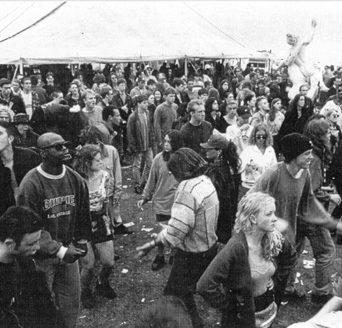
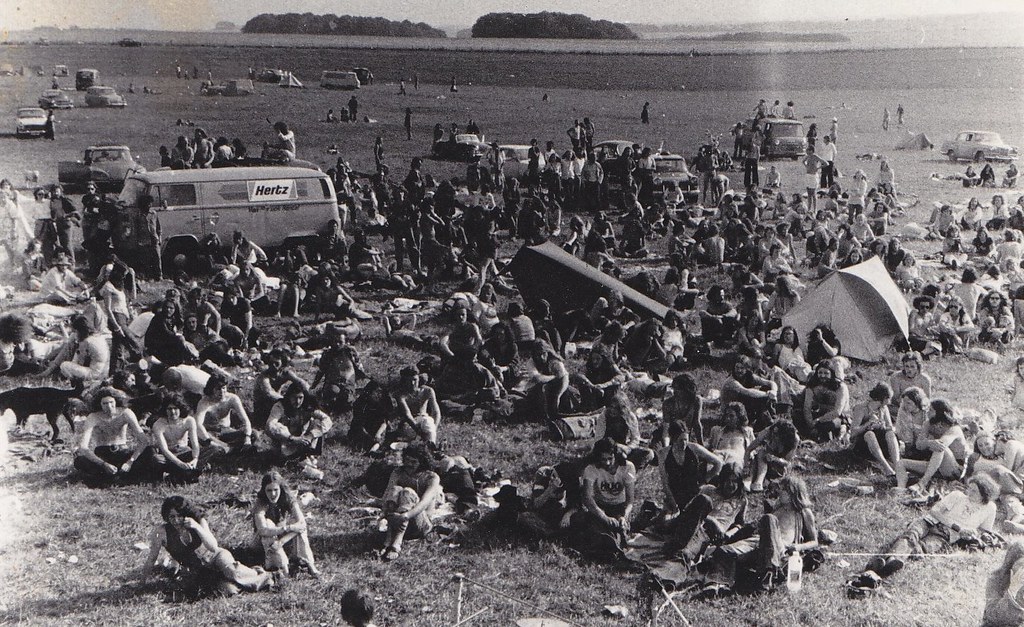
Picking up from where we left off with the discussion of the beginnings of Glastonbury festival; I would like to explore some of the festivals that were occurring alongside circa 72-77.
The free festivals we will explore today adopted the spirit of Plume City with a far greater political edge than the likes of Glastonbury. A repercussion of this was altercations and tensions with the authorities. A season migration was also beginning to grow from the urban city squats and communes to the summer free festival circuit. This would later evolve into the rural nomadic lifestyle commonly associated with the New Age Traveller movement today.
If you are interested in reading further about Stonehenge and The Battle of Beanfield, I highly recommend reading Andy Worthing two books (links to his website at the end). I will be using Worthing’s The Battle of The Beanfield as a primary point of reference for this week.
I have struggled to find other sources to cross reference this week, bar a few newspaper articles. However, I believe these events are important in establishing links and archiving my own material and pictures in later blogs. I’m not covering any new ground here, but I think it’s important to relay the information you may struggle to find on the web.
Windsor free festival 1972-1974
The Windsor Festival set the blueprint for what would later be the Stonehenge festival. It was illegally organised and branded as ‘’The people’s free festival’’. In contrast to the likes of Glastonbury, the event was anarchistic in both its nature and infrastructure with a complete absence of gates or fences. The attendance of 700 people was nearly outnumbered by the police.
The proceeding year saw an attendance of 8,000 people over the course of 10 days. Windsor free festival began to develop a self-serving infrastructure to cater to attendees with the trade of handmade goods, food and narcotics. For the 10 days of the festival, this helped establish a independent community. This would later be replicated in the Stonehenge free festivals.
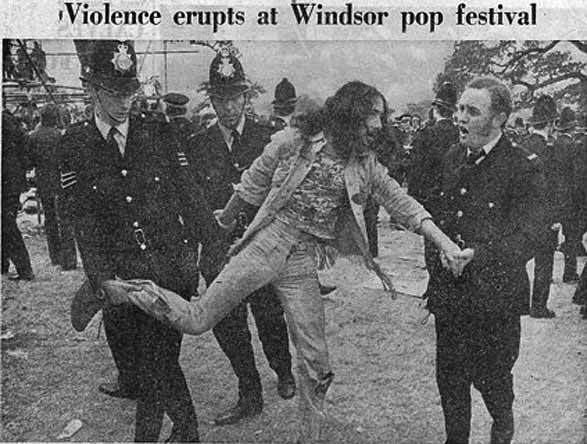
The last festival was in 1974 and had an attendance of 60,000 people. It went on without its founder Bill Dwyer who was incarcerated for two years for possession of LSD and causing public nuisance. Imprisonment became an everyday reality for both attendees and organisers of illegal free festivals.
Thames Valley Police had a heavy-handed turnout at the 1974 festival. A high level of reported police brutality a week after the festivals set up led to the festival being shut down. By the end of the weekend there was 220 arrests and 50 injuries (including police officers).
Stonehenge Free Festival 1974-1977
The mind behind the Stonehenge free festival was Phil Russel (Wally Hope). His disillusionment with the Windsor free festival inspired him to organise a massive tribal gathering at Stonehenge. After a stint at wormwood scrubs, Russel founded the cult-like group, ‘’The Wallies’’, to place his vision into action.
The first festival took place during the summer solstice of 1974. Unlike the whooping 60,000 attendees of Windsor that same year, the first Stonehenge festival had a turnout of a mere 500. A group of 30 proceeded to stay after the solstice. Russel and the Wallies were soon taken to court and evicted. But despite interference from the authorities, the Wallies immediately returned to the site and remained there until Winter solstice.
1975 was the second festival with an attendance of 2,000. Phil Russel was unable to attend after being arrested for possession of LSD. Soon after, he was sectioned under the mental health act; he passed away later that year. The circumstances of his death vary in account.
1976 saw 5,000 people arrived at Stonehenge festival. The festival was a dedication to Russel’s life and his ashes was scattered on the site. Several other festivals had sprung up over this period (Albion Fair, Psilocybin festival, Deeply Vale) that helped establish a network of free festivals to move to and from throughout the year.
In conjunction with this, the 1977 Criminal Law Act saw stricter squatting laws that pushed out a lot of drop outs, hippies and seasonal travellers. The culmination of a diaspora out of the city and a more concrete festival circuit is what can be attributed to the creation of the New Age Traveller movement today.
Around this transitional period of the free festival scene, far more people began to adopt camper vans and other vehicles that will later be dubbed the ‘’convoy’’.
Next issue, we will explore the golden era of Stonehenge and subsequent downfall of the new age travellers…
References/sources:
The Battle of The Beanfield, ed. by Andy Worthington, 2 edn. (Eyemouth: Enabler, 2005)
Andy Worthington , 30 Years On from the Last Stonehenge Free Festival, Where is the Spirit of Dissent? <http://www.andyworthington.co.uk/2014/06/21/30-years-on-from-the-last-stonehenge-free-festival-where-is-the-spirit-of-dissent/>
On This Day 1950-2005 BBC News, 1974: Rock Fans clash with police at festival, <http://news.bbc.co.uk/onthisday/hi/dates/stories/august/29/newsid_2536000/2536393.stm>
 Rural Counterculture,Politics and Protest